
一、装饰模式
动态地给一个对象添加一些额外的职责,就增加功能来说,装饰模式比生成子类更加灵活。
将不同的装饰功能,即需要向原有类添加的功能集成于不同的类当中,让这个类包装所要修饰的对象。
那么当需要有顺序地执行特殊的行为时,就可以采用装饰模式了。
二、实现思路
abstract class Component{
    public abstract void operation();
}

//原有类
class ConcreteComponent extends Component{
    @Override
    public void operation() {
        System.out.println("具体对象的操作");
    }
}

//装饰类
class Decorator extends Component{
    protected Component component;

    //将需要装饰的类设置进Decorator
    public void setComponent(Component component){
        this.component=component;
    }

    //执行原有操作
    @Override
    public void operation() {
        if (component!=null){
            component.operation();
        }
    }
}

class ConcreteDecoratorA extends Decorator{
    private String addedState;

    @Override
    public void operation() {
        super.operation();
        addedState="new state";
        System.out.println("具体装饰对象A的操作");
    }
}

/**
 * 首先运行原Component的operation(),
 *  再执行本类的功能,如addedBehavior(),
 *  相当于对原Component进行了装饰
 */
class ConcreteDecoratorB extends Decorator{

    @Override
    public void operation() {
        super.operation();
        addedBehavior();
        System.out.println("具体装饰对象B的操作结束");
    }

    private void addedBehavior(){
        System.out.println("装饰对象B添加行为");
    }
}

//客户端代码
class DecorationMain{
    public static void main(String[] args) {
        ConcreteComponent c=new ConcreteComponent();
        ConcreteDecoratorA d1=new ConcreteDecoratorA();
        ConcreteDecoratorB d2=new ConcreteDecoratorB();
        /**
         * 其实就是:
         *  首先用ConcreteComponent实例化对象c,
         *  然后用ConcreteDecoratorA的实例化对象d1来包装c,
         * 再用ConcreteDecoratorB的对象d2来包装d1,
         *  最后执行d2的operation()方法
         */
        d1.setComponent(c);
        d2.setComponent(d1);
        d2.operation();
    }
}
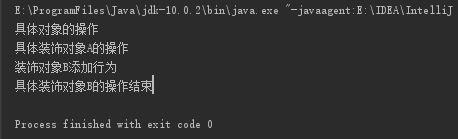
来源:https://www.cnblogs.com/chen-ying/p/11072969.html